

The Complete Guide to Rifle Ammo Types, Ballistics, and Caliber Selection
Rifle ammo can travel faster than the speed of sound before you even finish blinking, with some rounds exceeding 3,000 feet per second. That speed is what gives it the flat trajectory and devastating energy needed to reach targets accurately at distances beyond 500 yards. The secret lies in the cartridge’s bottleneck case, which lets a small powder charge build massive pressure behind a lightweight, pointed bullet. Matching the right bullet weight to your rifle’s twist rate is the single biggest factor in turning decent groups into one-hole accuracy.
Understanding Cartridge Anatomy: What Actually Makes Up a Rifle Round
A rifle round’s anatomy is a system of four interdependent components: the case, primer, propellant, and projectile. The case, typically brass, holds everything together and its headspace and shoulder geometry dictate chamber fit for your specific rifle. The primer, seated in the case head, is a shock-sensitive pellet that ignites the powder charge. Propellant—a granular, burn-rate-specific powder—produces gas pressure, while the Handgun Ammo for Sale bullet must match your barrel’s twist rate for stabilization. Neck tension, the case’s grip on the bullet, affects consistent ignition and pressure. Understanding that the cartridge’s overall length (COAL) influences feed ramp reliability and seating depth is critical. Inspect cases for case web thinning near the head, as that area endures peak pressure. Master these core parts before reloading or selecting ammo.
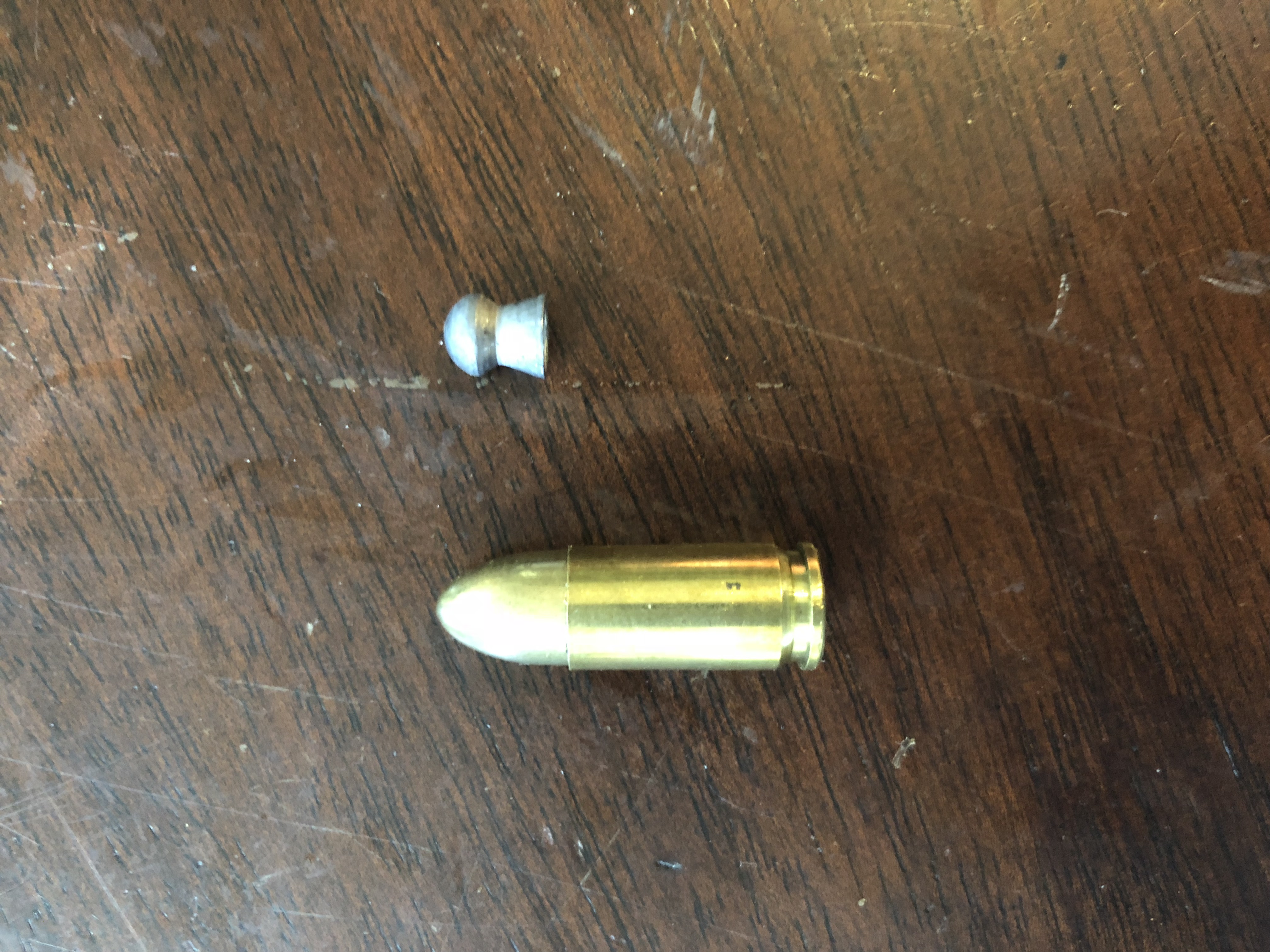
The Case, Primer, Propellant, and Projectile—How Each Part Affects Performance
The case determines chamber sealing and pressure tolerance, directly influencing how consistently the propellant burns. A thicker case wall resists expansion, delaying bolt thrust but potentially reducing powder volume. The primer’s sensitivity and flash intensity dictate ignition uniformity; a cold-sensitive primer causes velocity spikes, while a magnum primer in a small case can over-pressurize early. Propellant burn rate is the core variable—fast powders spike pressure quickly, ideal for light bullets, whereas slow powders sustain pressure for heavier projectiles. Finally, projectile weight and bearing surface interact with rifling to define optimal ballistic coefficient and terminal stability, affecting drop and wind drift.
| Component | Performance Influence |
|---|---|
| Case | Pressure containment, powder capacity |
| Primer | Ignition speed, pressure curve start |
| Propellant | Burn rate, velocity consistency |
| Projectile | Ballistic coefficient, expansion behavior |
Why Case Material (Brass, Steel, Aluminum) Impacts Feeding and Reloadability
Case material directly shapes how smoothly your rifle cycles and how many times you can reuse the brass. Brass offers the best feeding and reloadability because its slight elasticity springs back after firing, sealing the chamber and extracting cleanly without sticking. Steel cases lack that rebound, so they can expand and grip the chamber walls, leading to harder extraction and occasional jams in tight actions. Aluminum is the softest, prone to deforming on feed ramps or during ejection, which ruins reliability under rapid fire. For reloaders, brass trims, resizes, and anneals beautifully for multiple firings, while steel and aluminum crush or crack during resizing, making them one-and-done. This is why case material determines whether you get a smooth, repeatable cycle or frustrating bolt-cycling over a hot barrel.
Matching Bullet Weight and Caliber to Your Specific Hunting or Target Goal
For hunting, match bullet weight to the animal’s size and the expected shot distance: a 140–150 grain in a 7mm Rem Mag suits elk, while a 55–62 grain .223 excels for coyotes. Heavier bullets retain momentum and penetrate deep on heavy bone, but they drop faster at long Ammunition for Sale range, so a lighter, faster projectile flattens trajectory for pronghorn. In target work, choose a bullet weight that your rifle’s barrel twist rate stabilizes optimally—a 1:8 twist might shoot 77-grain .223 precision loads, whereas a 1:12 twist prefers 55-grain equivalents. Always verify your specific barrel’s twist before buying a box, as a mismatched weight will keyhole or group poorly. Remember that ballistic coefficient matters as much as raw weight for wind drift at 600 yards. For paper or steel, prioritize accuracy nodes over hunting penetration, but never assume a varmint bullet will hold up on a deer ethically.
Light vs. Heavy Bullet Grains: Trajectory, Recoil, and Wind Drift Explained
Choosing between light and heavy bullet grains boils down to a trade-off. Lighter bullets shoot flatter with less recoil, making them forgiving for quick shots, but they get shoved around by wind and lose velocity fast. Heavier grains carry more energy and buck the breeze better, holding their path at long range, though you’ll feel a sharper kick. For hunting, a heavier grain matters 6.5 Creedmoor Ammo for Sale more for ethical penetration, while target shooters often favor lighter loads for recoil management. Ultimately, heavy bullet grains minimize wind drift but demand practice to handle the added push and arc.
| Aspect | Light Grains | Heavy Grains |
|---|---|---|
| Trajectory | Flatter, faster drop-off | Lofter arc, holds speed |
| Recoil | Mild, snappy | Sharp, more thrust |
| Wind Drift | High, easily deflected | Low, stable in gusts |
Expanding vs. Full Metal Jacket: Choosing Between Terminal Effect and Penetration
Expanding bullets, such as soft points or bonded cores, initiate rapid energy transfer by mushrooming upon impact, creating 7mm-08 Ammo for Sale a larger wound channel at the cost of reduced penetration through bone or heavy muscle. Conversely, a full metal jacket preserves its shape, offering deep, straight-line penetration but risking over-penetration and minimal tissue disruption on lighter game. For hunting, select an expanding load when your target’s vitals are within 200 yards and you need a swift, ethical kill, but switch to FMJ for dangerous game or barrier shooting where terminal effect versus penetration balance demands reaching a vital organ through thick hide. Target practice, however, favors FMJ for cost and barrel life, but confirms your rifle’s zero with the same expanding round you hunt with, since impact velocity alters bullet behavior.
How to Read Ballistic Performance Numbers Without Getting Overwhelmed
Start by ignoring everything except muzzle velocity and the bullet’s ballistic coefficient (BC), as these drive the rest. Velocity, in feet per second, tells you the flatness of your initial trajectory, while BC shows how well the projectile retains that speed downrange. For practical shooting, focus on the drop chart at 100, 200, and 300 yards—not the full table. Wind drift matters only after you’ve confirmed elevation. Energy figures are useful for hunting but irrelevant for target work. Compare the 200-yard drop against your scope’s holdover in minutes of angle, not inches. If two loads have similar velocity but one has a higher BC, that one will drift less and drop less at longer ranges. Q: “What single number should I check first?” A: Muzzle velocity, because it reveals whether the load is consistent and flat-shooting before you ever dial a turret. Once you master those two basics, the rest becomes optional detail.
Muzzle Velocity, Energy, and Ballistic Coefficient—What Really Matters at 100 vs. 500 Yards
At the muzzle, velocity and energy dominate, but they’re only a starting point. A hot 100-yard load can feel impressive, yet by 500 yards, ballistic coefficient dictates true downrange performance. Compare a high-BC bullet retaining velocity versus a flat-base round shedding speed rapidly—energy drops non-linearly, so a 500-yard impact may carry half the punch. At 100 yards, a 0.300 BC round works fine; at 500, a 0.500 BC bullet drifts less and hits harder. Use muzzle numbers for marketing, but trust BC for real-world results.
| Metric | 100 Yards | 500 Yards |
|---|---|---|
| Velocity | High, flattish arc | Drops sharply without high BC |
| Energy | Peak, feels powerful | Can halve; BC preserves it |
| BC Impact | Minor difference | Major–controls wind drift and drop |
Comparing Spitzer, Boat-Tail, and Flat-Nose Profiles for Long-Range Accuracy
When comparing bullet profiles for long-range accuracy, the boat-tail design delivers the flattest trajectory because its tapered base reduces base drag, preserving velocity beyond 600 yards. Spitzer profiles, with their pointed tips and flat bases, offer excellent ballistic coefficients but suffer more from turbulent wake at extended distances. Flat-nose rounds, while powerful for hunting, shed velocity rapidly due to blunt frontal area, making them impractical past 200 yards. To choose correctly:
- Prioritize boat-tails for consistent downrange impact points.
- Select spitzers for mid-range versatility.
- Reserve flat-noses for short-range brush or lever-action rifles.
The aerodynamic efficiency of boat-tails directly reduces wind drift, which is the dominant variable in long-range miss distance.
Selecting the Right Ammunition for Your Rifle’s Twist Rate and Barrel Length
Selecting the right rifle ammo hinges on matching bullet weight and construction to your barrel’s twist rate and length. A faster 1:7 twist stabilizes longer, heavier projectiles like 77-grain match loads, while a 1:12 twist performs best with lighter 55-grain rounds, preventing keyholing or erratic flight. Barrel length Shotgun Ammo for Sale affects velocity: a 16-inch tube loses roughly 50–100 fps versus a 20-inch, so choose a heavier bullet for a shorter barrel to maintain energy and expansion at distance. For hunting, a 20-inch barrel with a 1:10 twist favors 62–70 grain controlled-expansion projectiles for reliable penetration; for precision shooting, test multiple bullet lengths at your specific twist to find the tightest group. Matching bullet weight to twist rate is the first step; verify with live-fire ladder tests.
A shorter barrel paired with a faster twist can stabilize a heavy bullet that your velocity cannot efficiently push, wasting powder and accuracy.
Always check the rifling pitch engraved on your barrel before purchasing ammo, and prioritize bullet base-to-ogive compatibility with your chamber throat.

The Relationship Between Twist Rate and Bullet Stability—Avoiding Keyholing
Twist rate governs the spin imparted to a bullet, and this angular velocity is what prevents gyroscopic destabilization. If your rifle’s twist is too slow for a given projectile’s length and weight, the bullet will not stabilize, causing it to tumble in flight—a failure known as keyholing, which produces elongated, oval-shaped holes in targets. To avoid this, match bullet length to the barrel’s twist: faster twists (e.g., 1:7) stabilize long, heavy bullets, while slower twists (e.g., 1:12) suit short, light projectiles. Always verify stability using the Miller formula or manufacturer data, and test at your intended range.
- Keyholing occurs when spin rate is insufficient for bullet length.
- Faster twist rates stabilize longer, heavier bullets; slower rates suit shorter ones.
- Confirm stability factor above 1.5 for optimal accuracy and flight.
How Barrel Length Affects Powder Burn and Practical Effective Range
Barrel length dictates the dwell time available for propellant combustion. In shorter barrels, pressure drops rapidly after bullet exit, leaving unburnt powder and wasted chemical energy, which manifests as a muzzle flash and reduced velocity. Consequently, a cartridge loaded with slow-burning powder designed for a 24-inch barrel will perform poorly in a 16-inch barrel, yielding lower speed and a louder report. Practical effective range shrinks proportionally with this velocity loss, as trajectory drop and wind drift increase. Conversely, longer barrels extract more energy from slow powders, extending flat-shooting distance. However, a fast-burning powder in a long barrel can spike pressure before the bullet engages the rifling, degrading accuracy. Matching burn rate to barrel length is therefore essential for optimal downrange performance.
Practical Storage and Handling Tips to Keep Your Cartridges Reliable for Years
To keep rifle ammo reliable for years, treat it like precision gear, not junk. Seal primers and bullet necks with a thin lacquer or polymer to block moisture, then store loaded rounds in airtight metal or polymer ammo cans with a desiccant pack, avoiding foam-lined Rimfire Ammo for Sale cases that trap humidity. Rotate your stockpile annually—shoot the oldest first—because even quality powder degrades, and inspect for tarnished brass or loose bullets before loading. Temperature swings are the enemy; keep cans in a stable, cool closet rather than a hot garage or damp basement, and never let rounds sit in direct sunlight.
A 50-round box left in a truck glovebox for one summer can lose 200 fps, while a sealed, climate-stable can stays ballistically identical after five years.
Handle by the case body, not the bullet, and wipe oily fingerprints off before chambering to prevent carbon-fouled extraction issues down the line.
Safe Temperature Ranges and Humidity Control for Long-Term Ammo Preservation
For rifle ammo longevity, treat your storage environment as a climate-controlled vault. Keep temperatures in a stable 55°F to 85°F range, avoiding extreme heat that degrades powder and cold that invites condensation. The real killer is humidity swings; maintain 30–50% relative humidity to prevent corrosion on brass and primers. Use desiccant packs inside sealed ammo cans, and check hygrometers monthly. If you rotate seasonal stock, let sealed boxes acclimate before opening to avoid moisture shock.
- Store ammo off concrete floors to avoid wicking moisture.
- Add silica gel or rechargeable desiccants in every container.
- Never expose rounds to direct sunlight or attic heat spikes.
- Vent storage area periodically to prevent stagnant damp air.
Signs of Deterioration—Corrosion, Tarnished Cases, and Misfires You Shouldn’t Ignore
Corrosion on rifle ammunition manifests as green or white powdery deposits, primarily around primers and case mouths, signaling chemical breakdown that compromises seal integrity. Tarnished cases, while often cosmetic, can indicate oxide layers that increase neck tension variability, leading to inconsistent bullet pull and pressure spikes. Misfires you shouldn’t ignore include delayed ignition, faint primer strike indentations, or a click without bang—each points to moisture-degraded primer compounds or eroded firing pin channels. Check for pitting near the case rim, which weakens extraction. If a cartridge fails to fire once, discard it; repeated misfires from the same box demand immediate inspection of storage conditions.
- Green verdigris around primers means active corrosion—separate affected rounds immediately.
- Dark, sticky residue on 7mm WSM Ammo for Sale case bodies indicates lubricant breakdown that attracts moisture.
- Hangfires (delay 6.5 PRC Ammo for Sale between strike and discharge) are dangerously unpredictable—never re-chamber a suspect round.
Common Accuracy Problems Solved by Switching Ammunition Brands or Lots
Switching rifle ammo brands or lots often resolves persistent accuracy problems rooted in inconsistent bullet geometry, case wall thickness, or powder charge uniformity. A new lot can eliminate vertical stringing caused by velocity spreads exceeding 15–20 fps, while a different brand’s tighter bullet-to-neck tension may shrink groups specialty sports by reducing seating depth variations. Copper fouling patterns that cause flyers after 10 rounds might vanish with a lot using a different jacket alloy or bearing surface. Q: Why would one lot group 1 MOA and another 3 MOA in the same rifle? A: Lot-to-lot changes in bullet ogive position or case neck thickness alter chamber pressure and barrel harmonics—matching a lot to your barrel’s preferred timing restores precision. Also, switching from a generic to a match-grade lot can solve cold-bore fliers by providing consistent ignition, and re-zeroing is unnecessary when only lot number changes, but groups often shrink immediately.
Why Your Rifle Groups Differ with Same Caliber but Different Manufacturers
Even with identical caliber markings, different manufacturers produce distinct internal geometries. Bullet profile, seating depth, and case neck tension alter the distance to the rifling lands, which directly changes pressure curves and projectile jump. Powder selection—burn rate, charge weight, and temperature sensitivity—shifts velocity nodes, while primer brisance influences ignition consistency. Barrel harmonics respond to these variables, meaning a round that groups tightly in one rifle may string vertically in another. Barrel harmonic matching is the core reason your groups shift, as the bullet’s exit timing relative to the barrel’s whip dictates dispersion. Even same-lot brass thickness and shoulder angle affect chamber fit, so what shoots sub-MOA from one maker’s box can open to two inches from another.
Q: Why do my groups Rifle Ammo for Sale tighten immediately just by switching manufacturers without changing anything else?
Because your barrel’s unique frequency aligns with that specific round’s pressure pulse and bullet dwell time, reducing oscillation at the muzzle. The other load’s timing is simply out of phase, causing erratic vibration transfer.
Testing Consistency: How to Do a Simple 5-Shot Ladder Test for Your Best Load
To test consistency across lots or brands, set up at 100 yards and fire a **simple 5-shot ladder test**—one round per charge weight, from low to high, in 0.3-grain increments. Shoot each shot at a fresh aiming point on the same target, recording which charge hits the same vertical POI. That “flat spot” signals a node where velocity variance is minimized. If all five group tightly despite charge changes, your rifle tolerates pressure deviations; if they string vertically, switch lots. For a quick check, fire two 5-shot ladders from different boxes on the same day—same temp, same wind. The load with the smallest vertical spread wins.
Q: How many shots per charge in a ladder test?
A: Just one shot per charge weight—you’re scanning for a node, not grouping. Confirm the node later with a 5-round group at that charge.